Modern cars can feel surprisingly heavy, even when their engines have fewer cylinders and smaller displacements than older models. Vehicle weight, tire size, insulation, safety equipment, electric systems, and chassis design all play a role. Automakers have also changed how cars deliver power and absorb road impacts. As a result, a smaller engine does not automatically create a lighter-feeling vehicle. Understanding these changes helps explain why a current compact SUV may feel more substantial than an older car with a larger engine.
Adding Safety Equipment and Structural Strength
Safety technology is one of the biggest reasons modern vehicles have gained weight. Cars now commonly include multiple airbags, stronger passenger compartments, advanced seatbelt systems, reinforced doors, and structures designed to manage crash energy. Driver-assistance features add more equipment. Cameras, radar sensors, control modules, wiring, and electronic actuators all require space and mass. Even features that seem small can contribute when combined across the entire vehicle. Engineers must balance weight with crash protection, durability, and performance. A modern vehicle may therefore carry more hardware than an older model while still using a smaller engine.
Increasing Insulation and Cabin Refinement

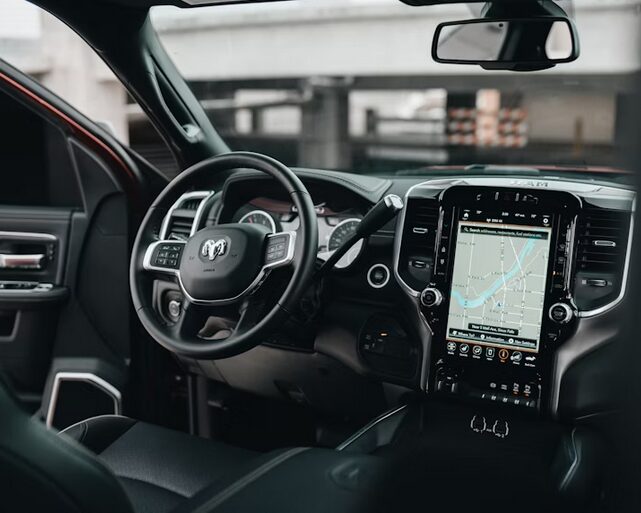
Modern vehicles are also designed to feel quieter and smoother. Extra sound-deadening materials can be placed inside doors, floors, dashboards, wheel wells, and other areas. Thicker glass and improved seals can further reduce wind and road noise. This creates a more isolated cabin, but it adds weight. Comfort features contribute too. Power seats, larger infotainment systems, heated and ventilated seats, premium audio equipment, powered tailgates, and multi-zone climate systems require motors, wiring, modules, and supporting hardware.
Using Larger Wheels and Tires
Wheel and tire sizes have increased dramatically across many vehicle categories. Larger wheels can improve appearance and allow manufacturers to use wider tires or larger brake systems. However, larger wheels and tires can also increase unsprung and rotating mass. This may affect how quickly the vehicle responds to steering inputs and how firmly it reacts to bumps. A heavy wheel-and-tire package can make a vehicle feel more planted, but it can also make acceleration, braking, and suspension movement feel less immediate. The sensation is especially noticeable when comparing an older vehicle with modest wheels against a newer model wearing large, low-profile tires.
Relying on Smaller Engines With Modern Technology
Engine downsizing does not necessarily mean reducing the overall mass of the car. It usually means producing similar or greater power from a smaller engine. Turbocharging, direct injection, variable valve timing, and sophisticated engine controls make this possible. A smaller turbocharged engine can replace a larger naturally aspirated engine while maintaining useful torque and power. The vehicle around it, however, may remain large and heavily equipped. Hybrid models can add batteries, electric motors, and power electronics. The result can be a powertrain that is technologically smaller in one area but heavier as a complete system.
Feeling Weight Through Steering and Suspension
Perceived heaviness is not always the same as actual weight. Steering calibration, suspension tuning, throttle response, and braking characteristics can change how a vehicle feels from the driver’s seat. Modern cars often use electric power steering, which allows manufacturers to adjust steering assistance through software. Some vehicles are deliberately tuned to provide a stable, substantial sensation at higher speeds. Suspension tuning matters as well. A softer setup can make a heavy vehicle feel calm and settled, while a firm setup can make its mass more noticeable over rough surfaces. Automatic transmissions can also change the sensation by managing engine speed and gear changes more smoothly.
Considering the Bigger Picture
The smaller engine under a modern hood is only one part of the vehicle. The rest of the car may contain more safety equipment, electronics, insulation, comfort systems, larger wheels, and structural reinforcement than previous generations. That is why engine downsizing and vehicle weight can move in different directions. Manufacturers are reducing engine size to improve efficiency and emissions while adding technology to meet safety, comfort, performance, and consumer expectations and everyday driving comfort.
Modern cars can therefore feel heavier because they often are heavier, but their driving character also comes from how that weight is distributed and controlled. Looking beyond engine size gives a clearer picture of why today’s vehicles can combine compact powertrains with a solid, substantial road feel.